

Product Details
Cold-rolled aluminum foil
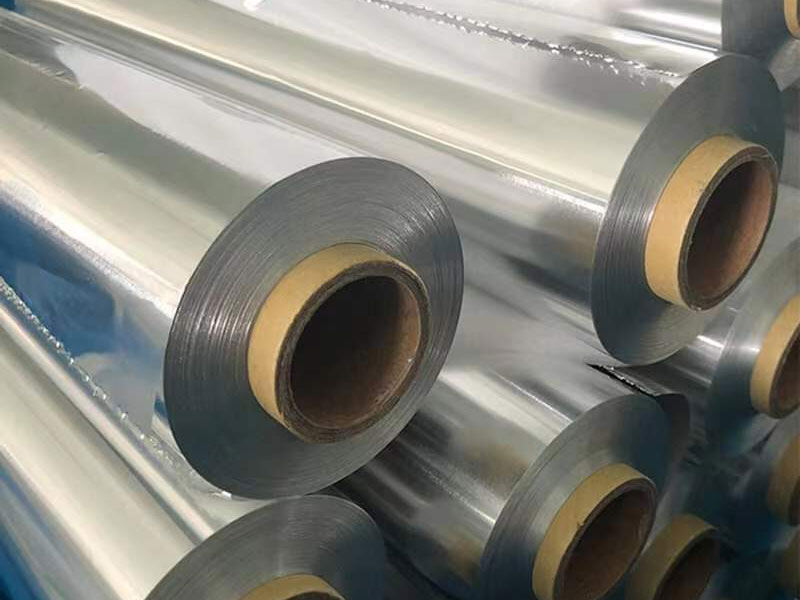
Cold-rolled aluminum foil
Product Overview
Cold-rolled aluminum foil is a ultra-thin aluminum product made from aluminum ingots through processes such as melting, casting, hot rolling, cold rolling, and finishing (thickness range: 0.01~{1.2} mm).
Product Details
1. Definitions and Classifications
Cold-rolled aluminum foil is an ultra-thin aluminum product manufactured from aluminum ingots through processes such as melting, casting, hot rolling, cold rolling, and finishing (thickness range: 0.01 to 0.2 mm). Based on alloy composition, it can be classified into:
1XXX series(Pure Aluminum Foil, e.g., 1060/1100): High conductivity and ductility; ideal for the electronics industry.
3XXX Series(Aluminum foil with anti-rust coating, e.g., 3003/3105): Highly corrosion-resistant; used in food packaging and pharmaceuticals.
XXX Series(5005/5705): Combines strength with machinability; targets the construction and home appliance markets.
6XXX Series(6061/6063): High-strength alloy for aerospace and precision instruments.
II. Production Process Flow
Melting and Ingot Casting
Al ingot purity ≥ 99.5%, melting temperature 750~780°C, and ingot cooling rate controlled at ≤ 15°C/min to prevent grain coarsening.
Hot rolling
Heat the ingot to 470~530°C, roll it to a thickness of 2~5 mm to eliminate casting defects and optimize the grain structure.
Cold Rolling
Rolling temperature: 0~30°C (low-temperature rolling enhances strength)
Rolling speed: 0.1~3m/s (cooling and lubrication required for high-speed rolling)
Thickness tolerance: ±0.005mm (for precision foil)
Key Parameters:
Multi-pass rolling (8–20 passes) with up to 90% reduction, achieving a final thickness of 0.01mm.
Finishing Process
Brightening: Electro-polishing (current density 10~20 A/dm²), surface roughness Ra ≤ 0.1 μm.
Coating treatment: Fluorocarbon coating (PVDF film thickness ≥ 20 μm) enhances weather resistance.
Annealing: Eliminate residual stress and restore plasticity (Temperature 300~450°C, Duration 1~5 hours).
Surface Finish:
III. Core Technical Features
Mechanical Properties
Tensile Strength: 100~300 MPa (5XXX series reaches up to 270MPa)
Elongation: ≥15% (1XXX series can reach 50%)
HardnessHV 30~80 (depending on alloy and annealing condition)
Surface Quality
Glossy Foil: Mirror Reflectivity ≥ 85%
Heat-seal foil: Ra roughness 0.5~3 μm (optimized for heat sealing)
Surface Condition:
Cleanliness: Metal impurity content < 10 ppm, oxygen content ≤ 0.15%.
Corrosion Resistance
natural oxidationForms a dense oxide film (thickness 10~20 nm) with neutral salt spray resistance exceeding 96 hours.
AnodizingCorrosion resistance after electrolytic coloring increases 5~10 times (e.g., black oxide film withstands chloride ion penetration for >5000 h).
4. Typical Application Areas
Packaging Industry
Food Packaging: 3003 series aluminum foil (thickness 0.03mm), blocks oxygen and moisture to extend shelf life.
Drug Packaging: 1060 is a sterile aluminum foil that complies with FDA certification.
Cigarette pack printing: 5005 series aluminum foil, suitable for printing fine patterns on the surface.
Electronics Industry
capacitor electrode foil: 1100 series ultra-thin foil (thickness 0.01mm), high dielectric constant (> 100).
Electromagnetic Shielding: 6061 series aluminum foil (copper-plated treatment), shielding effectiveness > 40 dB.
Architecture and Transportation
Insulation material: Aluminum foil composite (thickness 0.05mm), reflecting infrared energy savings up to 30%.
Car Air Conditioning:5XXX series aluminum foil (thermal conductivity 237W/m·K) for efficient heat dissipation.
New Energy Sector
Lithium-ion battery current collector: 6063 series aluminum foil (surface microstructure treatment) to reduce interface resistance.
Hydrogen Fuel Cell: Platinum-coated aluminum foil (thickness 0.1 mm), catalyst support material.
5. Technical Standards and Testing
International Standard
ASTM B221: Specifies foil thickness, mechanical properties, and dimensional tolerances.
ISO 5725: Surface defect grading (e.g., pinholes, scratch levels).
Domestic Standards
GB/T 3198Aluminum foil thickness tolerance (±3%).
GB/T 1629Anodized film thickness measurement (ellipsometry).
VI. Future Development Trends
Ultra-thin: Develop aluminum foil with thickness < 0.005mm nm for flexible electronic devices.
Functional:
Conductive Coating: Graphene-composite aluminum foil (conductivity > 10⁶ S/cm).
Self-healing coating: Microcapsule technology for repairing surface scratches.
Green Manufacturing:
Recycled aluminum foil: Waste recycling rate exceeds 95%, carbon emission intensity reduced by 40%.
acid-free rolling: Replace traditional mineral oil with eco-friendly lubricants.
Cold-rolled aluminum foil, with its superior comprehensive performance, has become an essential base material for high-end manufacturing. Its continuous technological evolution will drive innovation breakthroughs in packaging, electronics, and new energy sectors.
Application Areas
Our products are widely used in building curtain walls, roofing systems, appliance panels, industrial equipment, and more.
Building Curtain Wall
Roofing System
Appliance Control Panel
Industrial Equipment
Need professional technical support?
Our technical team will provide professional product selection, application solutions, and technical guidance services tailored to your specific needs.