

Product Details
Self-cleaning Aluminum-Magnesium-Manganese Color-Coated Sheet
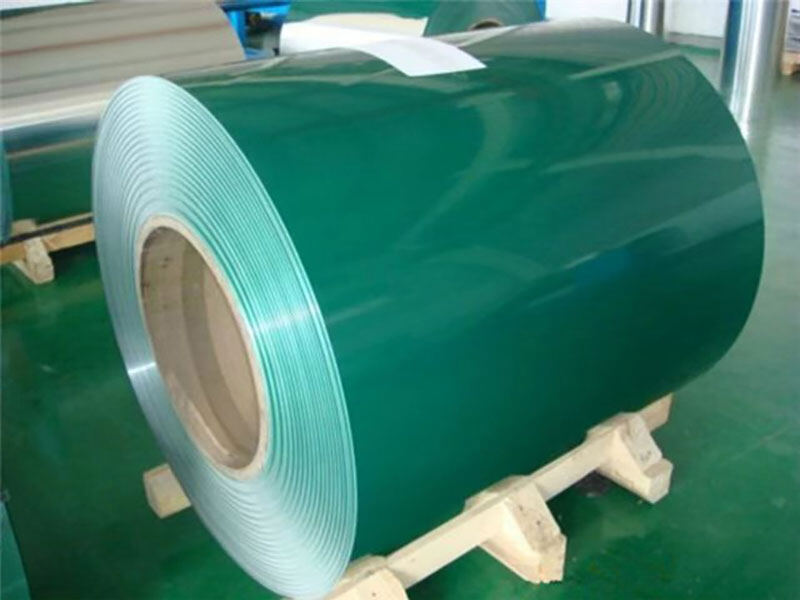
Self-cleaning Aluminum-Magnesium-Manganese Color-Coated Sheet
Product Overview
Self-Cleaning Aluminum-Magnesium-Manganese Color-Coated Sheet: A Pioneering Material Merging Technological Innovation with Architectural Aesthetics
Product Details
I. Product Overview
Self-cleaning aluminum-magnesium-manganese color-coated panels are a high-end building and industrial material that integrates functionality, environmental friendliness, and aesthetics. They feature an Al-Mg-Mn alloy substrate coated with a nanoscale self-cleaning layer and finished with a colored fluorocarbon spray coating, throughPhotocatalytic reactionandSuperhydrophobic effectDelivers active cleaning capabilities. Its core advantage lies in overcoming the pain points of traditional metal panels—susceptibility to contamination and difficult maintenance—making it an ideal choice for modern green buildings, new energy facilities, and industrial equipment.
II. Core Technology Analysis
Self-cleaning mechanism
Photocatalytic decompositionAdding titanium dioxide (TiO₂) nanoparticles to the coating triggers photocatalytic activity under UV light, decomposing airborne organic pollutants (such as NOx and VOCs) and dust into harmless CO₂, H₂O, and trace minerals.
Lotus effect hydrophobicMicro- and nanostructured surface design achieves a contact angle > 150°, causing rainwater, oil, and other liquids to bead up and roll off. This reduces adhesion and delivers passive self-cleaning with a simple rinse.
Optimized alloy substrate
Component RegulationPrecise Mg (4-6%) and Mn (1-2%) ratios in aluminum-magnesium-manganese alloys form a stable β-phase structure, delivering high strength (≥180 MPa) and corrosion resistance meeting ASTM B117-19 standards for over 2000 hours.
Heat treatment processT6 solution treatment and aging to relieve internal stresses, enhance fatigue resistance, and suit high-frequency vibration environments (e.g., wind turbine towers).
Surface Finishing Technology
Primer (Zinc Chromate Epoxy): Provides underlying corrosion protection and adhesion (≥70 N/mm²).
Color Layer (Fluorocarbon Resin + Metallic Pigments): Ensures color saturation (Pantone ΔE < 3) and UV resistance (QUV aging test > 2000 hours).
Self-cleaning functional layer: Composite TiO₂/silica nano-coating (thickness 15-30 μm), light transmittance > 85%, without compromising natural lighting.
Four-coat, three-cure process:
3. Performance Advantage Comparison
Metrics | Self-cleaning Aluminum-Magnesium-Manganese Color-Coated Sheet | Traditional Fluorocarbon Aluminum Panel | PVC composite |
|---|---|---|---|
Self-cleaning capability | Dynamically decomposes pollutants; maintenance cycle ≥ 10 years | Manual cleaning required; cycle: 3-6 months | Dusts easily; requires frequent wiping. |
Corrosion Resistance | Marine salt spray test: no rust after >5000 hours | 3000 hours of slight oxidation | 1000 hours of surface chalking |
strength-to-weight ratio | 180 MPa / 2.7 kg/m² | 150 MPa / 3.1 kg/m² | 60 MPa / 4.5 kg/m² |
Carbon Emissions | Production energy consumption reduced by 40% (recovery rate: 98%) | High-temperature spray coating generates high carbon emissions. | Chlorofluorocarbons (CFCs), poor environmental performance |
Transmittance | ≥85% (optional semi-transparent model) | ≤70% | 0% |
4. Application Scenarios and Typical Cases
Green Building Facade
Shanghai TowerThe exterior facade uses self-cleaning aluminum-magnesium-manganese panels, reducing air conditioning energy consumption by 30% and saving over ¥200 annually in maintenance costs.
Gardens by the Bay, SingaporeCombines photovoltaic glass with self-cleaning coatings to achieve dual benefits: controlling light pollution and conserving ecosystems.
New Energy Infrastructure
Wind turbine tower: Designed for wind and sand resistance, successfully deployed at the Kubuqi Desert Wind Farm in Inner Mongolia for 5 years with a failure rate of less than 0.5‰.
PV module frameConductive aluminum alloy substrate with self-cleaning surface to reduce efficiency loss from dust shading (PID suppression > 90%).
Industrial and Transportation Equipment
High-speed rail platform canopyUV-resistant aging and self-cleaning capabilities ensure a 25-year service life; Hong Kong West Kowloon Station has shown no fading after 10 years of use.
Port crane boomResists seawater impact and oil corrosion; case studies from Qingdao Port show maintenance frequency reduced by 60%.
5. Production Process and Certification Standards
Manufacturing Process
Melt and castVacuum melting of Al-Mg-Mn alloy ingots (purity ≥ 99.7%) → Casting into billets → T6 heat treatment.
Rolling: 4-roll cold roll forming (thickness tolerance ±0.05 mm) → Chemical cleaning → Surface pretreatment.
Spray coating: electrostatic powder priming → UV curing → precision silk-screen color printing → self-cleaning topcoat application → infrared curing.
International Certification
Material Properties: Passed ISO 12944-2 weathering certification (Class 5) and ASTM E312 gloss testing (85° gloss).
Environmental StandardsCompliant with RoHS Directive (heavy metal content < 0.01%) and REACH SVHC exemption.
6. Market Prospects and Technology Iteration
With the advancement of the "Dual Carbon" strategy, self-cleaning aluminum-magnesium-manganese colored aluminum panels are projected to reach a global market size exceeding $80 billion by 2025, driven by their low-carbon advantage across the entire lifecycle (LCA carbon footprint is 55% lower than traditional materials). Future R&D directions include:
Photoelectric Collaboration: Integrate perovskite solar cells to achieve unified building-integrated power generation.
Smart ResponseDevelop thermo- or hygro-responsive coatings that automatically adjust surface wettability (e.g., superhydrophobic in rain, hydrophilic for anti-fogging on sunny days).
Self-cleaning aluminum-magnesium-manganese color-coated panels represent not only a breakthrough in materials science but also a core enabler of the construction industry's transition toward sustainability and intelligence. Guided by the philosophy of "empowering materials with technology to serve ecosystems," these panels are redefining standards for modern architecture and industrial equipment, emerging as a focal point in global high-end markets.
Application Areas
Our products are widely used in building curtain walls, roofing systems, appliance panels, industrial equipment, and more.
Building Curtain Wall
Roofing System
Appliance Control Panel
Industrial Equipment
Need professional technical support?
Our technical team will provide professional product selection, application solutions, and technical guidance services tailored to your specific needs.